UPDATED CONTINUOUSLY
Last update, Oct 23, 2023
DNA to mRNA transcription, homeostasis, and order in the human organism after zygote formation and embryogenesis depend and are regulated by nutrients not medicine and drugs. Triveni P. Shukla
ABSTRACT
Cellular reprograming by Yamanaka factors even if completely successful is not going to be for the longevity of general public. Evolution has dedicated almost 72% of all genes to our digestive system indicating that longevity resides in every bite of a well designed balanced daily diets. Antioxidant and anti-inflammatory polyphenolic flavonoids, we are beginning to understand, can act as senolytics for a longer life-span and health-span that can be further enhanced by morning exercise and yoga by managing routine DNA to mRNA transcription. Even better for longevity is an Indian yogi or seer like morning routine of preparing your body for the day by meditating, introspecting and self reflecting, learning something mew, exercising both mentally and physically, and praying or Patanjali’s surrender to the Almighty or the super-soul (pranidhan). In a sense, explore your day with as controlled a mind as possible.
This post communicates the story of transcription and translation of our genes as it relates to longevity by epigenetic reprograming or by the the generally agreed upon senolytic nutrients in our daily diet.
The story of 46 compressed chromosomes around histone proteins each with varying size of DNA molecules containing at least 20,000 genes with promoters and regulator sequences requiring specific proteins hasn’t been unraveled yet; neither has the story of proteins of circadian rhythm that tie us humans to the planet earth.
Genome of 3.6 X 10 to 9 nucleotide pairs make 46 pairs of condensed and compressed chromosomes ( one DNA molecule/chromosome) which carry genes. This nucleosome of DNA-Histone Protein coil makes chromatin fiber. The gene is a linear segment of linear DNA. The gene is transcribed into mRNA ( 40 to 80 nucleotides/second) which moves out in the cytoplasm and translates (20 amino acids/second) nucleotide codes into thousands of polymers of amino acids (proteins) with the help of thousands of ribosomes. Also, the DNA carries information for gene expression as when and what type of cell and for duplication of DNA. Also, nucleus talks to mitochondria via histone methyl-transerase and acetylation is the key in genomic and epigenomic landscape/
THE INDIAN VEGETARIAN DIET
Modern food and nutrition science is revealing today that the old Vedic diet of legumes and lentils, tubers such as potato and sweet potato, vegetables and fruits, and whole grains and their mixtures that I grew up are called pillars of longevity. Research shows that Vitamins A and D, fatty acids, and phytosterols directly and butyric acid from soluble fiber, fisetin from strawberries, apples, and cucumbers, diallyl sulfide from garlic, sulphoraphane from broccoli, less of resveratrol from red wine, and a lot of quercetin from onion indirectly control the rate of transcription of DNA to mRNA , the key to life and longevity (Nutrients, 13(5): 1513, May 2021). Probiotics create a microbiome that connects with the mind and body for modulating nervous system, production of short chain fatty acids from soluble fiber, developing the immune system, synthesis of vitamins B12 and K, and protection against pathogenesis.
Flavonoids are present in Indian cuisine in a range of 50 to 100 mg /100 grams of by consumption of tea, coffee, apple, guava, tamarind bark, fenugreek and mustard seed, cinnamon, red chili powder, clove, cardamom, and turmeric. This is a new and exciting field of research.
SENOLYTIC NUTRIENTS IN INDIAN DIET
Natural senolytic molecules common in Indian diets (quercetin, fisetin, and drug dasatinib have been found to induce apoptosis of senoscent cells and improve life-span and health-span (Mech Aging Dev. July 18, 2019). Active research is going on at Erasmus Medical School in the Netherlands and a collaboration at University of Texas, Sam Antonio, Mayo Clinic, and Wake Forest School of Medicine. We don’t know the mechanism, by which quercetin and Fisetin flavonoids work with the drug dasatinib.


 Quercetin Fisetin Piperlongumine Curcumin
Flavonoid Myricetin Ergothioneine Kaempferol Trigonelline (Fenugreek)
———————————————————————————–
Quercetin: Two hydoxylated rings joined by a ring pyrane C. A flavonoid polyphenol widely present in fruits, vegetable, and tubers.
Ficetin (Biomolecules, 9(5): 174, 2019), Two aromativ rings joined by a a heteocyclic ring C. Number of hydroxyls matter in function.:
Piperlongumine: is an amide alkaloid of anti-inflammatory function. Kills skin cells (Front Pharamacology, 12: 818326, Jan 12, 2022)
Curcumin: 4000 years old spice credited with 3000 publications during the last 20 uears. Bipeperine from blavkpepper makes this diferuloyl methane (a ketone) more bioavalable,
Myrestin: 2 aromatic rings joined by an oxygenated C ring (Current Pharmacology Report, 8(1); 118061, 2023
Ergothioneine is a thiohistidine betaine amino acid with potent antioxidant activity ( Nutrition Res Rev , 33(2): 190-217, Jan 12, 2020).
Trigonelline from Fenugreek is an antibacterial and neuroprotective. India is the highest producer with 125,000 MT most of which is consumed in India. The export is only 799 MT (2012 data).
—————————————————————————————
Widely distributed in nature, flavonoids (Anthoxanthins -flavanone and flavanol-, flavanones, flavanonols, flavans, chalchones, anthocyanidins, and isoflavonoids are the different subgroups of flavonoids (Molecules, 25(22): 5243, 2020).

The antiviral, antimicrobial, antimalarial, anticarcinogenic, antiangiogenic, neuroprotective, and anti proliferative properties of 10,000 of these molecules are in effect antiaging properties. It is too bad that we do not have a good record of them all. Fisetin and quercetin are now recognized as powerful senolytics,
Structural analogy of quercetin, myricetin, and fisetin as senolytics is impressive. The number of OH groups determine the antioxidant activity. Senolytic molecules seemingly are agents of nutrient therapies. Other senolytic flavonoids are resveratrol, luteolin from citrus, myricetin, and EGGG from green tea. Choline, the precursor of neurotransmitter acetylcholine may belong to this group (university of Ottawa). It is highly advisable to consume fisetin on a regular basis from apples, grapes, and kiwi. Fisetin is a powerful senolytic to be used for improving memory and cognition. It has been shown to increase longevity in mice by 10% (https://www.ncbi.nlm.nih.gov/pmc/articles/PMC6082705/).
Asiaticoside from Gotu Kola leaves,  although noy researched well yet, may belong to senolytic saponins. They are widely used in India. Diedzein and genistein from soyabean and glycirrhizic acid are well researched as bioactive compounds (https://www.sciencedirect.com/topics/chemistry/asiaticoside).
However, just like medicine, nutrition too is very personal with respect to type and dose of various nutrients starting early during fetal development. The proof is in the often revised nutritional guidelines for infants, the young, adult, and the old people. Gene expression patters, although similar in early stages, are different in even older twins. Nutrition makes us into what we are and it can remake us. We need choline, vitamin B12, Vitamin D, iron, and folate throughout our lives (Front Nutrion, Nov 22, 2022). Transcription depends on foods we eat (Nutrients, 9(5): 492, 2017).
TRANSCRIPTIONS IN OUR STOMACH
Beginning alpha-amylase in the saliva and including genes transcribed in stomach (196), ileum (203), and colon (227), the often nutrient dependent transcriptome of the digestive system is not well understood. Of 29162 genes, 72 percent or 14516 are expressed in our stomach: 321 slow developed, 13,733 in heart, 148 in kidneys, 195 in lungs, 76 in the pancreas, 35 enriched genes, and 81 group enriched genes. I speculate that a daily diet of variety of foods creates a normal intestinal proteome which may increase longevity. The liver alone expresses 67% of all human genes. Close to 56 groups of enriched genes of our stomach must have physical meaning as to how much, how many types, and how timely we consume our foods. Food as an environmental factor must impact maximally on our epigenome (Nature Communication, article No 3375 (2018)) Epigenetic regulators are altered in gastric cancer via DNA methylation, histone modification, and modification of noncoding RNAs. Even our daily behavior can alter our epigenome and, therefore, the transcriptome.
I should remind ourselves that each one of us is a different person at 10 AM in the morning compared to 10 PM during the late evening (Biomedicine, 9 (80, 967, 2021. Handb Exp Pharmacology 217: 3-72, 2013). Circadian rhythm orders transcription in each and every cell of human body. This rhythm initiated by sun’s photons in the morning will have to be reset for incremental longevity.
Can an appropriate diet keep the epigenome constant from birth onward to a long life-span? Good epigenome, it appears, can be prolonged by plant-food diet, stress control, knowing your hunger and response to it , living with purpose, punctual movement and exercise, social connectedness, and our behavior. Cellular reprograming will have to accommodate our cell’s connection to the movements of the planets. The genes of proteins CLOCK and BMAL4 are Known. A good breakfast makes sense given the heavy duty transcription load in the morning hours. Since cellular events are organized in time and space, our daily nutrients are most likely key modulators ( J Molecular Rhythms, 19 (15): 388-300, 2004). Both nutrients and meal time affect the circadian clock that governs our digestive system which is active during the morning hours and quiescent during late evening and the night. The circadian clock prepares us for meal time. Very apt in this regard is India’s belief in maximum productivity during BRAHM MUHURT in the morning hours that I personally adhered to during my primary and high school days during 1950s. Brahm muurta was 1 and half hours before sunrise (Rig Veda III.33.5 and Satpath Brahmana X.4.2.18).
Epigenetic reprograming involves genome wide erasing and remodeling of DNA methylation and histone modification that have occurred throughout our young life to our current age. Our dietary nutrients should bring about ideal signaling and transcription of DNA to mRNA and subsequent translation into proteins that support our daily life and longevity (Haret Gerald W., J. Biol. Chemistry, Vol. 294 (7): 2211- 2231, Feb 15, 2019). Nutrients influence DNA replication, transcription, and translation of codes of life into vital proteins as enzymes and neurotransmitters. Nutrients can act as ligands to transcription factors. They can alter gene expression. For example, vitamins A and D bind promoters of genes and regulate intracellular receptors. Furthermore, nutrients can change chromatin structures, non-coding RNA, activate transcription factors, and direct ligand binding to nuclear receptors.
Lipids and carbohydrates regulate gene expression by means of molecules that sense these macronutrients and act as transcription factors. The peroxisome proliferator-activated receptor (PPAR), activated by some fatty acids or their derivatives, and the carbohydrate response element binding protein (ChREBP), activated by glucose-derived metabolites, play a key role in metabolic homeostasis, especially in glucose and lipid metabolism. Diet dictates gene expression for metabolic regulation, homeostasis, and even pathologies and, as reveals the Stockholm study, biomarkers of low cholesterol and glucose may mean a longer life-span.

Nutrients 2021, 13(5), 1513; https://doi.org/10.3390/nu13051513
Nutrients can alter individual phenotypes via their influence on gene expression and can alter pathways. The consequences of nutrient deficiency are well known. Carbohydrate, fat, and amino acids modulate transcription activities by directed gene expression (Intl. J. Mol. Sci., vol 20(3):1386, March 19, 2019).
Specific nutrients involved are folate, polyphenols, flavonoids, phytosterols, soluble dietary fiber, omega-3 fatty acids and micronutrient minerals. Diet-linked therapies have kept us alive for centuries ( Giacarboni and Pichard, Clinical Nutrition, 22 (5): 429-35, Oct 22, 2003). Nutrition no doubt can induce gene expression.
Banana, buckwheat, cacao, horseradish, millet, pumpkin leaves, raw dried dates, raw pumpkin seeds, raw almonds, raw spinach, oats, sesame seeds, spirulina, sunflower seeds, turnip greens, and watercress increase production of neurotransmitters. Gamma-aminobutyric acid (also known as GABA), dopamine, serotonin, acetylcholine, and norepinephrine are important neurotransmitters that are vital for memory, learning, alertness, and sleep. An ideal diet should balance both hormones and neurotransmitters.
EXAMPLES OF NUTRIENT CONTROL OF SPECIFIC TRANSCRIPTION
I have excerpted below four figures and descriptions from Nutrients, 13(5): 1513, May 2021 in order to make my point. The readers should consult this reference.

Polyunsaturate fatty acids in particular the omega-3 types are involved in transcriptional regulation.
General mechanisms of transcriptional regulation by fatty acids (FA). Fatty acids bind to the TLR4 or GPR membrane receptors, inducing inflammation or hormone secretion, respectively. They can also bind to nuclear receptors, although their interaction with LXR and HNF-4α is not entirely clear. In contrast, PUFA binding to PPAR can induce transactivation from the formation of the active heterodimer PPAR-RXR, which promotes different pathways of fatty acid use, or trans-repression, recruiting NF-κB and preventing its action on its target genes and thus reducing inflammation. Regarding transcription factor SREBP, its maturation is repressed by fatty acids through inhibition of Ubxd8 and promoting the sequestration of SREBP by SCAP and INSIG, among other mechanisms. This figure was created with Servier Medical Art. (https://smart.servier.com/, accessed on 20 August 2020) under a creative commons license (https://creativecommons.org/licenses/by/3.0/). https://www.ncbi.nlm.nih.gov/pmc/articles/PMC8145205/

Cells in different organs and tissues have their special and unique ways of influencing transcription. Metabolic functions of PPAR in the main organs and tissues. https://www.ncbi.nlm.nih.gov/pmc/articles/PMC8145205/
Regulation of nuclear translocation and transcriptional activity of ChREBP. https://www.ncbi.nlm.nih.gov/pmc/articles/PMC8145205/ Metabolic functions of PPAR in the main organs and tissues. The three PPARs coordinate glucose and fatty acid (FA) homeostasis by acting on the liver, pancreas, skeletal muscle (SKM), heart, brown adipose tissue (BAT) and white adipose tissue (WAT), essentially. The actions of PPARγ are shown in red, PPARα in blue and PPARβ in green. This figure was created with Servier Medical Art (https://smart.servier.com/, accessed on 20 August 2020) under a creative commons license (https://creativecommons.org/licenses/by/3.0/).

The nucleus rubs our life. Regulation of nuclear translocation and transcriptional activity of ChREBP. Inactivated ChREBP is located in the cytosol due to phosphorylation by PKA and AMPK and the allosteric inhibition of mTOR, HSL, AMP or ketone bodies. In the presence of glucose, the metabolite G6P induces an active conformation of ChREBP and PP2A, activated by X5P, dephosphorylates it. Partially dephosphorylated ChREBP is translocated to the nucleus, where it undergoes several post-translational modifications important for its activity. The heterodimer ChREBP-MLX binds to several coactivators (such as LXR, HCF1, HNF-4α and p300/CBP, the latter two being repressed by FXR) in order to complete the active transcriptional complex. The proteins included in black circumferences have an allosteric effect, and the yellow circles represent the post-translational modifications of the residues (Ac: acetylation; OG: O-GlcNAcylation; P: phosphorylation). This figure was created with Servier Medical Art (https://smart.servier.com/, accessed on 20 August 2020) under a creative commons license (https://creativecommons.org/licenses/by/3.0/).

Metabolic functions of ChREBP/MondoA in the main organs and tissues.
ChREBP is abundantly expressed in liver and adipose tissue, where it induces glycolysis and lipogenesis represented in the liver. It is also expressed in the intestine and pancreas, where its actions are indicated, highlighting in red the pathological ones. In the skeletal muscle, MondoA stands out. ChREBP promotes the expression of the metabolites MUFA, PAHSA and the hepatokine FGF21, and these are proposed to be responsible for the insulin sensitivity effect. Genes activated by ChREBP are shown in yellow. Pyr: pyruvate; TG: triglycerides. This figure was modified from [111], and created with Servier Medical Art (https://smart.servier.com/, accessed on 20 August 2020) under a creative commons license (https://creativecommons.org/licenses/by/3.0/).
The following abbreviations may help reading the figures better.
PPAR alpha, beta, and gamma (Peroxisome proliferator Activated Receptors), peroxisome being the membrane bound organale in all our cells.
ChREBP (Carbohydrate response element binding protein).
LXR (Liver X Receptor)
HNFAx (Hepatic nuclear Factor 4)
RXR (Retinoid X Factor)
PUFA (Polyunsaturated Fatty Acid)
KEY EXAMPLES OF GENE EXPRESSION CONTROL BY NUTRIENTS
1. Vitamins A and D regulate intracellular receptors that bind oromoters of specific genes.
2. Polyphenols, flavonoids, and phytosterols. Quercetin and fisetin are under research now.
CASE HISTORIES OF NUTRIENT CONTROL OF TRANSCRIPTION AND GENE EXPRESSION
1. Response to amino acid limitation (Annu Rev Nutr. 2005; 25: 59–85).
2. Lipids and carbohydrates control gene expression (Nutrients 2021, 13(5), 1513; https://doi.org/10.3390/nu13051513).
Please note that DNA replication is 20X faster than transcription which is the first step to gene expression. Also, note that six or more events may be taking place on a chromosome at the same time. chromosomes in the nucleus are the structures where DNA molecules exist in a exquisitely packaged form for protection during copying at the time of cell division without any change in their structures.

https://www.genome.gov/about-genomics/fact-sheets/Chromosomes-Fact-Sheet
The number of chromosomes in various living organisms vary given their evolutionary background. spinach has12; Rye, pea, and barley have 14 chromosomes; garlic gas 16; carrot, radish, cabbage, and citrus have 19; maize and cacao have 20; beans have 23; rice and tomato have 24; pistachio has 30; Baker’s yeast has32; sunflower has 34; bacteria have just 1 or 2; fruit fly has 4; dog has 39; and male orchid has 27 plus 9 sex chromosomes, The length, position of centromeres, and the banding patterns are very critical in chromosome structures.
Forty six chromosomes in humans exist in 23 pairs of different sizes depending on the length of DNA molecules. All 46 DNA molecules put together length wise make a linear rod of 6 feet. Packaging and coiling around histone proteins serves as molecular compression. What we have to learn is the unpacking of DNA and its replication and transcription as rate processes.
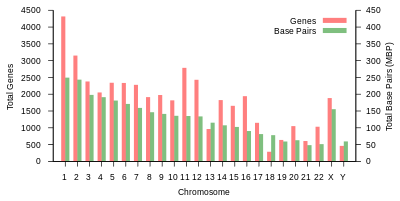
https://en.wikipedia.org/wiki/Human_genome#Molecular_organization_and_gene_content
Chromosomes in the nucleus are associate with many proteins required for gene expression, DNA replication, and DNA repair. DNA and five different kind of histone protein make nuclear complex called chromatin, in a way condensed chromosome. Histone present in equal amount to DNA for reasons of organization contain positively charged evolutionarily conserved structures arginine and lysine. The repeating core of histones around DNA is called nucleosome. The six-fold compression involves two times around eight histones wrapping 145 to 147 bps. The 30 nm chromatin fiber lopes again compressing 20-100 kilo bps finishing into a 250 nm fiber.
This packaging reduces the size of chromosomes 10,000 fold, The upstream promoter regions of genes, where proteins bind in order to initiate transcription, are part of the entire sequence of the DNA molecule. All 46 chromosomes have a compressed length of 200nm. The haploid human genome has 3 billion base pair. All these microstructural intricacies of DNA compaction and the genes within DNA sequences reveal the complexities of unfolding and replication of DNA during the rate limited process of transcription.
A CASE OF EPIGENETIC REPROGRAPING
I find the Wickipedia article (https://en.wikipedia.org/wiki/Human_genome#Molecular_organization_and_gene_content) a good read for understanding the complexity of unwinding of a gene’s structure from the chromatin and translating it into a protein. A good deal of cell biology has yet to be discovered for decoding a gene and its expression. Can reprograming undo CpG methylations in the promoter and enhancer regions containing Cpg islands and can it undo new twists and turns added to the histone based chromatin structure. Can it return the gene expression profiles back to the young age by creating the original chromosome superstructure? We don’t even have a final count of genes in our genome, although we do know the complete sequence codes of all 46 amino acids. There are 20,000 to 23,000 genes on 46 DNA molecules. We have to know more than the number of DNA molecules and the number of genes depicted in pictures below about start and stop codons, more than one code for certain amino acids, and the number of genes in the graph above.

The Khan Academy

A healthy life depends on accurate copying of the coded information in a portion of a chromosomes’ DNA. Further the mRNA molecule has to be spliced before it exits the nucleus for its work by the ribosome in the cytoplasm. The reading frame with start and stop codons, the choice of evolution, has to be identified for reading from p to q arm of the chromosome in 5′ to 3′ direction
A cell has to decide what gene to read at what time that are dispersed unorderly over the length of the DNA molecule. We have 20-40% regulatory genes, intron as noncoding portion of the a gene, and the exon, the pseudogenes, 50 % of the genome’s repetitive sequence, and the transporons or the genes that jump along the DNA molecule. The regulatory sequence has to be activated, then RNA polymerase carries out transcription, introns and exons have got to be spliced by the splisosome, and transcription factors can activate or inhibit transcription.
The structure of a eucaryotic protein-coding gene involves regulatory sequence that controls when and where expression occurs for the protein coding region. Promoter and enhancer regions regulate the transcription of the gene into a pre-mRNA which is modified as to the removal of introns and add extra nucleotide sequences as 5′ cap and poly-A tail for mRNA stability. The mRNA 5′ and 3′ untranslated regions regulate translation into the final protein product.
Beyond the DNA code for proteins, sequence modifications by way of repeats (alignment of homology during recombination), CPG islands in promoter regions for methylation, 5′ Caps and Poly A tails, perform a variety of specific functions. Thousands of transcriptions are produced every second and control of gene expression takes place early at the point of initiation of transcription. One mRNA molecule, the exon in the cytoplasm, can serve as a transcript for many proteins. We have to monitor this story gene by gene.
Epigenetic reprograming has to reset cell specific DNA methylation and histone modification patterns. This is not an easy job but the initial trials indicate success in recreating a cell’s youthful activity. Senolytic nutrients have been at work throughout our evolution and bites of well designed daily diet can enhance longevity. We do not know exactly how.
Can we prolong longevity by foods and exercise alone the Vedic way? The answer isYea! They Can ( Biomolecules, 13(2): 318, Feb 7, 2023). Nutrition and exercise can restore the epigenome to its embryonic stage but the regimen of the two environmental factors should begin right after infancy during the formative years of our lives. This has not been done yet in regard to establishing life-span. There is no doubt though that all major nutrients and micronutrient needs can be met as long as we consume whole grains and their mixtures, a variety of tubers, lentils and legumes, fruits and vegetables, seeds and nuts, and a variety of probiotics such as yogurt, kimchi, sauerkraut, and plant based natto cheese. We may have to formulate our soup and food paste recipes for completeness during infant feeding for senolytics like quercetin and fisetin. We must make morning exercise and physical and mental activity a punctual routine in our daily life University of Copenhagen and University of CA, Irvine). We should walk, do cardio-exercises. learn new things, plan future wisely, review use of medications with the physician periodically, and do what we enjoy doing advise Chris Hemsworth, the Australian actor and Steve Horvath of University of CA, Los Angeles.
Yamanaka factors are double-edge sword, If over exposed, the somatic cells may loose their identity. Senolytics for incremental longevity seems to be a better approach. To live longer and healthier, we have to prepare each day with morning meditation and introspection with as controlled a mind as possible. We need to live by our cell;s circadian clocks.
Citations
-
https://www.ncbi.nlm.nih.gov/probe/docs/applexpression/
-
https://geneed.nlm.nih.gov/topic_subtopic.php?tid=15&sid=22
-
http://www.austincc.edu/tav/1406adobe/4a-generegulation.pdf
-
https://www.ncbi.nlm.nih.gov/pubmed/10089110
-
https://medlineplus.gov/dietaryfiber.html
-
https://www.nih.gov/news-events/news-releases/nih-study-offers-insight-into-why-cancer-incidence-increases-age
-
https://ods.od.nih.gov/factsheets/Folate-HealthProfessional/
-
https://www.ncbi.nlm.nih.gov/pmc/articles/PMC2882124/
-
https://www.ncbi.nlm.nih.gov/pmc/articles/PMC3040418/
-
https://www.ncbi.nlm.nih.gov/pmc/articles/PMC2835915/
-
https://lpi.oregonstate.edu/mic/dietary-factors/phytochemicals/flavonoids
-
https://www.nih.gov/news-events/news-releases/nih-study-offers-insight-into-why-cancer-incidence-increases-age
-
https://www.nap.edu/read/10299/chapter/7#35
-
https://www.ncbi.nlm.nih.gov/pmc/articles/PMC2745745/
-
https://www.ncbi.nlm.nih.gov/pmc/articles/PMC4097889/
Leave a Reply