Human beings are too ordered to stay immortal and defy entropy. Triveni P. Shukla
DEFINITIONS AND FACTOIDS
Molecular Clock in each of our cells: Molecules of proteins are behind the circadian cycles. There is are gene for these proteins and the biological clock is built into our genome. Yamanaka factors to be functional have to reset this clock.
Youthful DNA Pattern or resetting the molecular clock and rewriting the epigenome: The pattern of methylation that is different from the embryonic state controls and keeps time. It may reverse age when somatic cells are transformed into I PSCs.
Nutrients and DNA Methylation: Common nutrient choline donates methyl group to s-Adenosyl Methionine, the key molecule that methylates DNA. Amino acid methionine is necessary for making SAM with the help of vitamins B6, B9, and B12. Garlic’s diallyl sulfide talks to histone proteins that help compress DNA. Butyrate and broccoli acetylate histones and resveratrol de-acetylates them. Soya genistein is involved in methylating DNA . What we eat restructures DNA monomers and its histones that house it. Nutrients are involved in DNA to MRNA transcription. Can nutrients rest the moleculard clock in our cells?
Chrono-nutrients: Epigenome, microbiome, and circadian rhythm are interrelated. We need to time our eating time in view of circadian rhythm. Caffein synchronizes to new time zones. Nobiletin and resveratrol are other examples. Vitamin D3, resveratrol, and curcumin promote stem cell growth. Epicatechin from dark chocolate stimulates stem cells. When we eat and what we eat (high fat or ketogenic diet) affects circadian rhythm in our day to day life. Fasting and low calorie diets switch glucose metabolism to fatty acid metabolism and promote rejuvenation activity of stem cells. Green and cruciferous vegetables enhance cellular rejuvenation. Sulphoraphane of broccoli boosts enzymes. Natural rejuvenation can come about via fasting, eating low calorie foods, reducing triglycerides, stem cell supplementation, and anti-inflammatory antioxidants.
Rejuvenation by Brain Foods of green vegetables, seeds, nuts, whole grains, 36 vegetable in every week, and foods that are anti-inflammatory and antioxidant. Additional examples are fish salmon, Coffee, Chocolate, Curcumin from Turmeric, Broccoli, and ragi. Please that nuts are seeds and the embryo in seeds and nuts have stem cells in their merry stem as they begin to grow.
Yamanaka Factors, Oct-3/4, Sox 2, kif4, cMyc, are four over expressed genes in embryonic cells that control DNA to mRNA transcription and further translation into proteins. They are also abbreviated as OSKM genes. When over expressed somatic cells become iPSCs. iPSCs may, hope some leading researchers, reverse age. Calico Life Sciences, Life Biosciences, and Turn biotechnology are using epigenetic or partial reprograming for longevity and age reversal but biology of return to youthfulness is mysteriously enigmatic. Rewriting the epigenome is not very straight forward. Noted scientists working in this area are Vittorio Sebastian of Stanford, David Sinclair of Harvard, Juan Belmonte of Salk Institute, Daniel Eves of Shift Biosciences, Jacob Kimmel of Calico Life Sciences, and Joan Mannick of Life Sciences.
Transcription: Coded information is transformed into mRNA and other RNAs from DNA for making proteins responsible for running our young, adult, and old age life.
Physical Effects of yoga, exercise, quitting smoking affect circadian rhythms and help maintain longevity. Exercise boosts stem cell activity. Yamanaka factors are not the only silver bullet for longevity and possible age reversal. Nutrition and life-style does account for longevity.
LIST OF THE LONGEVITY MOLECULES
Enzyme CaMKII- a protein kinase for neural plasticity, nobiletin- a flavonoid from citrus peel, resveratrol- a natural phenol, curcumin- a phenolic , valproic acid – antiepilectic drug, thazovilin- generates iPSCs, carnosine – a dipeptide, carnatine- an amino acid that converts fat to energy , trignonellin – an alkaloid, flavonoid luteolin, quercetin- a plant flavonoid, fisetin- a potent natural flavanol, PPQ- pyroloquinelin quinone, and taurine- a sulfur containing amino acid. Most of these are plant food nutrients.
This food scientist is a fundamental biochemist. He thinks that it is not realistic to believe in building nations of all 100 years old citizens? The unrealistic longevity researchers systematically ignore the cost of keeping a sizable population of a nation alive but underproductive as a liability to their nations. They don’t appreciate that molecular biology doesn’t offer any clear-cut mechanism for demonstrable immortality and longevity and that aging and death is built into our genome. The complexity of the transcription process tells the story as follows.
-
Temporal Dynamics of transcription is not yet fully known. We know that 2,800 proteins have DNA binding domains of which 1600 are transcription factors, the molecular machines grouped by DNA binding domains that transcribe a human being by controlling rate and timing of transcription. Hoping that just four Yamanaka factors can successfully account for 150 years longevity and make our millionaires and billionairs happy is unrealistic. Time itself has got to be a factor.
-
I do not think that we will ever be able to stop the nucleus within our cell from leaking. It is too complex a structure to monitor in terms of the rate of transcription and gene expression and, furthermore, transcription process per se is subject to a constant reconfiguring of temporal factors. Binding proteins can’t access DNA unless the nucleosome opens up.
-
Let your imagination run and visualize the DNA histology. Chromosomes are composed of DNA tightly-wound around histones. Chromosomal DNA is packaged inside microscopic nuclei with the help of histones. These are positively-charged proteins that strongly adhere to negatively-charged DNA and form complexes called nucleosomes. Each nucleosome is composed of DNA wound 1.65 times around eight histone proteins. Nucleosomes fold up to form a 30-nanometer chromatin fiber, which forms loops averaging 300 nanometers in length. The 300 nm fibers are compressed and folded to produce a 250 nm-wide fiber, which is tightly coiled into the chromatid of a chromosome. RNA polymerase II and transcription factors have their jobs cut out in entering and exiting this structure.

https://www.nature.com/scitable/topicpage/dna-packaging-nucleosomes-and-chromatin-310/
- As we imagine and visualize, let us keep in mind that the open DNA double-helix is 2 nm, The beads-on -string are 11 nm, the chromatin fiber is 30 nm wide, condensed metaphase chromosome is 700 nm, and the chromosome per se is 1400 nanometers. Nucleosome positioning itself is a dynamic process and its positioning in terms of closeness of DNA to histone Octomers is itself a factor in transition. Imagine steric and electrostatic hindrance!
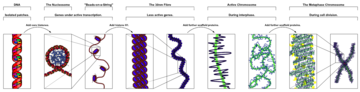
https://en.wikipedia.org/wiki/Chromatin
Yes! Just four Yamanaka transcription factors have been found to demethylate the epigenome back to its youthful state but the efficiency is low and there are risks of tumor formation, mutations, and incomplete reprograming. Managing transformation of a somatic cell to an induced Stem Cell of the young embryonic type is not very predictable.
Christopher Petty et al. of Harvard Med School did a little better. They used 6 Yamanaka transcription factors for making young somatic cells . Doing this for 331.89 million people in the USA is down right impossible. Furthermore, how would we support this relatively underproductive mass of people?
The Yamanaka factors that can reprogram cells into their embryo-like state are at the heart of current longevity and age-reversal research. Yamanaka factors- genes Oct3/4, Sox2, Klf4n, and c-Myc, did help reprogram somatic cells into Induced Pluripotent Stem Cell (iPSC) as a close copy of an embryonic cell and reset the epigenetic markers to a youthful DNA pattern of adulthood i a few cases. But the problems with Yamanaka transcription factors are their extremely low efficiency and possible tumor formation. The iPSC (induced pluripotent stem cells) route may by the choice for tissues of heart cells, red blood cell production, and new organs be well and good. A better route may be the use of small molecules like valproic acid and Thazovilin as therapeutic nutrient analogues .
TRANSCRIPTION PROCESS AND THE FACTORS
Ten percent of all genes are for 2000 transcription factor proteins in human cells. They are small 50KD proteins capable of entering into the chromatin complex, scan and read it. They bind to sequence specific region of DNA in order to control rate and timing of transcription. They can turn genes off or on. The question is about what genes and at what time.
THE CASE FOR CHROMONUTRIENTS
Vitamins A, D, fatty acids, cholesterol, zinc, and water soluble dietary fiber, certain short chain fatty acid butyrate like metabolites affect transcription process. Nutrients matter in controlling the speed of RNA polymerase II.
Transcription process can be triggered by hormones, mechanical stimuli, and also by metabolites from water soluble dietary fiber. Enzyme RNA Polymerase II is the most widely studied in relation to transcription. Aging may be regulated by changing the epigenetic landscape by managing transcription but our research today is only infantile.
RNA POLYMERASE II
RNA polymerase II (RNAP II and Pol II) is a multiprotein complex that transcribes DNA into precursors of messenger RNA (mRNA) and most small nuclear RNA (snRNA) and microRNA. It is one of the three RNAP enzymes found in the nucleus of eukaryotic cells. A wide range of transcription factors are required for it to bind to upstream gene promoters and begin transcription. RNA polymerase II is key holoenzyme and the speed (number of nucleotides elongated per minute) at which it works given the state of cell is critical to disease and health. It is born to deal with promoter region of a gene and the SRB proteins in transcribing mRNA and all small nuclear RNAs. RNAP senses the nutrient nucleotides ( EMB Journal review , Vol 40 (15), 2021; Gene Dev 34 (13, 14), 883-897, 2020). Nutrients do seem to control transcription. RNA polymerase II speed is the key. It would be great if we can find dietary nutrients for transforming somatic cells to functional iPSCs.
https://www.embopress.org/doi/epdf/10.15252/embj.2020105740
Dedicated to transcribing DNA to mRNA, RNA POLYMERASE II with 12 subunits has a very complex functions. The fast or slow speed at which it helps differentiate cells depend on onco-genetic stress and cellular depolarization. How does it skip exons and carries out transcription to an alternative exon induction is not easy to control? Do our daily nutrients or their derivatives act as stimuli ? we do not know well enough.
Roger D Kornberg ‘s Nobel Prize work for the Structure of RNA polymerase II tells us that the speed of this essential to life enzyme is regulated and this enzyme can build up to 1300 to 4300 bases per minute.
Somatic cells have genetic material to become pluripotent. SHINYA YAMANAKA FACTORS, another Nobel Prize Work, on FOUR TRANSCRIPTION FACTOR GENES Oct4, Sox2, Klf4, and cMyc can transform a somatic cell into iPSC. Somatic cells can be reprogramed to become an embryonic cell. iPSCs have longer telomere, fast growth rate, and better mitochondrial function. All this can account for longevity.
Can we undo changes in old age gene expression of our epigenome? Can we make our epigenome young? What of the oxidative stress, DNA damage, and continued modification of epigenome, mitochondria, proteins, and lipids in our life time? Is the idea of Backing up epigenome that simple? Can carnosine and carnitine like small molecules help? Work with mouse at sub micromole concentrations of Yamanaka type factors suggests that they may.
Small Molecules that Mimic Yamanaka Transcription Factors

The list of the following small molecules that enhance iPSC generation efficiency and quality may replace Yamanaka factors by acting as inhibitors, activators, or uncoupling agents.
| Target or signaling pathway | Name | Concentration | Host cells | Efficiency and necessity | Reference |
|---|---|---|---|---|---|
| HDAC inhibitor | VPA | 0.5–2 mM | Mouse, human | >100-fold | Huangfu et al. (2008) [31] |
| HDAC inhibitor | SAHA | 5 μM | Mouse | 10-fold | Huangfu et al. (2008) [31] |
| HDAC inhibitor | TSA | 20 nM | Mouse | 10-fold | Huangfu et al. (2008) [31] |
| HDAC inhibitor | Sodium butyrate | 0.5–1 mM | Mouse, human | 100-fold | Mali et al. (2010) [66] |
| DMNT inhibitor | 5-aza-CR, AZA | 0.5 mM | Mouse | 3-fold | Mikkelsen et al. (2008) [29] |
| DMNT inhibitor, histone deacetylase inhibitor | RSC133 | 10 μM | Human | 3-fold | Lee et al. (2012) [10, 67] |
| Retinoic acid receptor agonist | AM580 | 100 nM | Mouse | ~200-fold | Wang et al. (2011) [68] |
| H3K4 demethylation inhibitor (epigenetic modulator) | Tranylcypromine (Parnate) | 5–10 μM | Mouse | 3-fold | Li et al. (2009) [35] |
| Epigenetic modulators | DZNep | 0.05–0.1 μM | Mouse | 65-fold | Hou et al. (2013) [27] |
| Retinoic acid receptor ligand | TTNPB | 1 μM | Mouse | 15-fold | Hou et al. (2013) [27] |
| ALK4, ALK5, and ALK7 inhibitor | SB431542 | 10 uM | Human | Thiazovivin and PD0325901, ~200 fold | Lin et al. (2009) [62] |
| Selective MEK/ERK inhibitor | PD0325901 | 1 uM | Human | Thiazovivin and SB431542, ~200-fold | Lin et al. (2009) [62] |
| Rho-associated protein kinase inhibitor | Thiazovivin | 1 uM | Human | PD0325901 and SB431542, ~200-fold | Lin et al. (2009) [62] |
| Rho-associated protein kinase inhibitor | Y27632 | 10 uM | Human | Improve generation and maintaining | Claassen et al. (2009) [69] |
| AKt-mediated inhibitor of GSK3-β | Compound B6 | 1 μM | Mouse | 3-fold | Li et al. (2009) [35] |
| GSK-3β inhibitor, LSD1 inhibitor | LiCl | 5–10 mM | Mouse and human | >10-fold | Wang et al. (2011) [68] |
| TGF-β inhibitor | A83-01 | 0.5 μM | Mouse, human | 7-fold | Zhu et al. (2010) [59] |
| Prolyl-4-hydroxylase inhibitor | N-Oxalylglycine | 1 μM | Human | Zhu et al. (2010) [59] | |
| ALK4 inhibitor | Compound B4 (TGFb-RI) | 1 μM | Mouse | 4-fold | Li and Rana (2012) [70] |
| mTOR inhibitor | Rapamycin | 0.3 nM | Mouse | 4.8-fold | Chen et al. (2011) [71] |
| IP3K inhibitor | Compound B8 | 1-2 μM | Mouse | 3-fold | Li et al. (2009) [35] |
| P38 kinase inhibitor | Compound B10 | 1-2 μM | Mouse | 3-fold | Li and Rana (2012) [70] |
| cAMP agonist | Prostaglandin E2 | 5 μM | Mouse | Efficient in mixture | Hou et al. (2013) [27] |
| cAMP agonist | Rolipram | 10 μM | Mouse | Efficient in mixture | Hou et al. (2013) [27] |
| cAMP-dependent protein kinase activator | 8-Br-cAMP | 0.1–0.5 mM | Human | 6.5-fold | Wang et al. (2011) [68] |
| PDK1 activator | 5-(4-Chloro-phenyl)-3-phenyl-pent-2-enoic acid (PS48) | 5 μM | Human | 15-fold | Zhu et al. (2010) [59] |
| HIF PHD1 and PHD2 inhibitor | N-Oxalylglycine | 1 uM | Human | 3.5-fold | Zhu et al. (2010) [59] |
| Phosphofructokinase 1 activator | Fructose 2,6-bisphosphate | 10 mM | Human | 2-fold | Zhu et al. (2010) [59] |
| Hypoxia-inducible factor pathway activator | Quercetin | 1 μm | Human | 3-fold | Zhu et al. (2010) [59] |
| Oxidative phosphorylation uncoupler | DNP | 1 μM | Human | 2-fold | Zhu et al. (2010) [59] |
Open in a separate window
Quercetin and rapamycin are good examples in the table above.
Note: small molecules can improve reprogramming efficiency by epigenetic modifications or signaling pathway regulation. Many of these small molecules or compound combinations can also replace c-Myc or other transcription factors. DNP, 2,4-dinitrophenol; DZNep, 3-deazaneplanocin; FSK, forskolin; HDAC, histone deacetylase; IP3K, inositol triphosphate 3-kinase; PDK1, phosphoinositide-dependent kinase 1; SAHA, suberoylanilide hydroxamic acid; TF, transcription factor; TSA, trichostatin A; VPA, valproic acid; 2-Me-5HT, 2-methyl-5-hydroxytryptamine; 5-aza-CR, AZA, 5-azacytidine; 8-Br-cAMP, 8-Bromoadenosine cyclic monophosphate.
SPECIFIC NUTRIENTS AND GENE EXPRESSION
- It has been known for a while that vitamins A and D affect gene expression by binding intracellular receptors that bind the transcription factors.
- Work on other nutrients that affect gene expression such as cholesterol, glucose, hydroxytyrosol from olives and olive oil per se, and dietary fat is a newly reported research. (https://nap.nationalacademies.org/read/10299/chapter/7).
- Glucose activates binding factor ChREBP and fatty acids to the peroxisome proliferating factor (PPAR). Please review the figures below.

Cholesterol Control control of Gene expression

Eicosanoid regulation of gene expression.
Source: National Academies of Sciences, Engineering, and Medicine. 2001. Scientific Advances in Animal Nutrition: Promise for the New Century: Proceedings of a Symposium. Washington, DC: The National Academies Press. https://doi.org/10.17226/10299.
Also,
- Folic acid, B vitamins, and SAM-e (S adenosyl Methionine) affect methylation during early development. The methyl groups can silence genes. Your mother’s diet during pregnancy and your diet during infancy and formative years can have long lasting effects.
- Glucose controls release of insulin from beta-cells of pancreas. It controls and induces gene expression of both pyruvate kinase and insulin. Glucose availability alters many gene expressions, in particular the master oncogene C-MyC (Cell and Developmental Biology, July 7, 2020) necessary for needs of nucleic acid, protein, and lipid for cellular proliferation.
- Cholesterol regulates its own metabolism and nuclear content. It is part of cell membranes and steroids. The cell regulates uptake of cholesterol via low density protein (LDL). Low level of cholesterol regulates LDL receptor and enzyme cholesterol synthase. The processes are reversed when cholesterol level goes up. Much of it depends on nuclear family of transcription factors. Three Sterol Regulating elements of Binding Proteins (SREBP) have been identified. Transcriptional control of gene expression is another important mechanism that regulates HMG-CoA reductase, a rate limiting enzyme, in cholesterol biosynthesis.
- Dietary fat and resulting fatty acids are also regulators of gene expression (Cell1997 May 2;89(3):331-40). Precursors of eicosanoid fatty acids serve as ligands for nuclear receptors SREBP-1C affects transcription factors. SREBP-1c primarily regulates the expression of genes involved in DNL and triglyceride synthesis, including, ACL, ACC, FAS, SCD1, and GPAT(Zakim and Boyer’s Hepatology, 6th. Edition). Dietary fat and essential fatty acids control too many genes and their deficiency in our daily diet is not good for our health. We have known since 2006 that obesity alone involves more than 50 genes.
-
Water soluble fibers affect transcription.
- The Mediterranean Diet folks rightfully tout the value of hydroxytyrosol from extra-virgin olive oil up to 413 mg per 100 grams of black olives. Cherries and red wine can deliver moderate amounts too. As a nutrient, hydroxytyrosol induces gene expression, dilates blood vessels, and acts as an anti-inflammatory antioxidant. This food is exclusive to Mediterranean diet in Greece, Spain, and Italy.
- D3, reduces arterial defibrillation.
- Trigonellin from coffee, fenugreek, and radish enhances memory (https://neurosciencenews.com/coffee-memory-trigonelline-23964/).
- Avocado with their monounsaturated fatty acids enhance memory.
- Beets with nitrates dilate blood vessel for reducing blood pressure.
- Nuts and seeds with Vitamin E improve memory.
-
Magnesium glycinate is absorbed well and functions better.
It is very clear that optimum calorie food intake complete with RDAs of micronutrients is critical to ideal gene expression patterns for good health and longevity. Let us explore some new and convincing research on longevity.
- Gaining 5-10 years of extra life has to come from changes in personal life-style and gene expressions.
- If at age 80 you look like 20 or 30 years old, you are going to live longer.
- Keep your 78 organs healthy.
- Keep the epigenome protected from effects aspartame, Sucralose, other non-caloric sweeteners, and high fructose corn syrup. Stay away from ultra processed foods that affect gene expression and the mix of bacteria in our microbiome via emulsifiers in them (https://www.nature.com/articles/s41467-018-05778-1).
- Electrical DC pulse can induce gene expression (ETH genetics of Switzerland). This technology may soon come to health care centers.
There is overwhelming consensus on consuming antioxidants, omega-3 fatty acids, collagen peptides, CoQ10, vitamin D, probiotics, and resveratrol for a long life in good health but we do not yet have a predictable measure. This to me is a consensus on the ability of our daily nutrients to control gene expression for healthy life and longevity. We have to select and consume daily nutrients as wisely as possible. The table below compiles the role of nutrients in day-to-day DNA methylation, histone acetylation, and synthesis of methylation precursors that may help necessary transcription.
| Nutrient | Food Origin | Epigenetic Role |
| Phenolics | Water Hyacinth, High Protein | |
| Methionine | Sesame seeds, Brazil nuts, fish, peppers, spinach | SAM synthesis |
| Folic Acid | Leafy vegetables, sunflower seeds, baker’s yeast, liver | Methionine synthesis |
| Vitamin B12 | Meat, liver, shellfish, milk | Methionine synthesis |
| Vitamin B6 | Meats, whole grain products, vegetables, nuts | Methionine synthesis |
| SAM-e (SAM) | Popular dietary supplement pill; unstable in food | Enzymes transfer methyl groups from SAM directly to the DNA |
| Choline | Egg yolks, liver, soy, cooked beef, chicken, veal and turkey | Methyl donor to SAM |
| Betaine | Wheat, spinach, shellfish, and sugar beets | Break down the toxic byproducts of SAM synthesis |
| Resveratrol | Red wine | Removes acetyl groups from histones, improving health (shown in lab mice) |
| Genistein | Soy, soy products | Increased methylation, cancer prevention, unknown mechanism |
| Sulforaphane | Broccoli | Increased histone acetylation turning on anti-cancer genes |
| Butyrate | A compound produced in the intestine when dietary fiber is fermented | Increased histone acetylation turning on ‘protective’ genes, increased lifespan (shown in the lab in flies) |
| Diallyl sulphide (DADS) | Garlic | Increased histone acetylation turning on anti-cancer genes |
We should add to this list magnesium glycinate, trignonellin from coffee and radish, water soluble fibers, curcumin, omega-3 fatty acids, vitamins A and D, quercetin, carnosine, carnitine, coffee, omega-3 fatty acids, chocolate, and curcumin like brain foods .
EXERCISE AND MOVEMENT
We know that movement and exercise help maintain longevity. The proof is in most yoga guru’s having enjoyed over 100 years healthy life including Shivakumar Swami of Karnataka (1907-2018), Rosa Vazhapilly (1903-2015), Louverdina Conceicao Lobo (1908-2021), Nolieni Mrend Momin(1905-2018), Kiemsima kharmawlong (1900-2015), Savitri Devi Pandey (1905-1919), Swami Sivanand (1896- 2013), and Mahasta mursi (1835-1971). Other names can be added for rigor including Indra devi (1889-2002), Shri Tirumalai Krishnamacharya (1888-1989), Ida Herbert (1920-2020), V. Nanammal (1920-2019), B K S Iyenger (1918-2014), Vera Paley (1999-2021), and Krishna Pattabhi Jois (1915-2009). I believe that the reasons are timely calorie-controlled diets and punctual yogic exercises.
The foods consumed by 100 years old people seem to have been huge factors for longevity: Adele Danlap of USA consumed oatmeal, Emma Morano of Italy and Susanna Mushatt of USA consumed eggs and bacon for breakfast, Misao Okawa of Japan ate Shushi and slept well, yoga instructor Tao Parchon-Lynch was a vegetarian with only occasional consumption of shrimp and lobster, Yisreal Kristal ate pickled herring every day, and Vivlet Brown consumed mutton, fish, sweet potato, oranges, and mangos. This adds credence to the value of foods for longevity. A parallel story is that of Greenland where people live on marine meat and fish and enjoys a life expectancy of 73.98 years for men and 77 years for women. Life expectancy in Spain and Italy is 86.4 and 84.5 years respectively. The fish-eating Japan has a life expectancy of 85.03 years (2023). In general, the growth in life expectancy during the 1995-2015 period is due to the better and better nutrition, better health services and better medicine.
GENE EXPRESSION AND LONGEVITY
A nations entire population can’t be drugged or treated by genetic therapies that manipulate gene expression. LONGEVITY HAS TO COME FROM NUTRITION because the belly controls our mind. What nutrients can set our cells to their youth is the key question? What nutrients can mediate with our nucleosome and control its static and dynamic state? What nutrients influence copying of DNA to mRNA called transcription? Can nutrients per se restore epigenic marks that are lost by DNA degradation? Can we keep patterns of methylation unchanged throughout our life? Human bodies get old because of cumulative loss of epigenetic marks that tell genes to turn on or off… the methyl groups on cytosines that is . Methylation changes the activity of a DNA segment we call gene.
Nutrients do DNA Methylation: DNA methylation controls gene expression through altering chromosomal structure, DNA conformation, DNA stability, and the functional ways DNA codes make proteins billions of times every second.
We need a cost effective technology for Human Health. We need to find measures of how to measure how we feel, look, and be our best. We need to be productive through out a long life because longevity without performance is of very little value. All our global neighbors, it seems, are opting for vegetarian foods for longevity and active life style for the body and the mind. Let us explore some details.
VEGETARIANISM AS A WAY TO LONGEVITY.
We read and hear every day that
- Vegetables, peppers, broccoli, celery, onion, cabbage are necessary for for skin health.
- B1, Luteolin, Carnosine, Carnitine are promoters and minimize Advanced Glycation Elements.
- The flavone luteolin improve longevity.
- Better Skin w/o wrinkles, low stress, low inflammatory markers.
- Antioxidants fisetin from strawberries and PPQ from natto and green tea.
- The Diet of Beans for protein, fiber, resistant starch, polyphenolic antioxidants, and a dish of rice and beams is great for health.
- It makes me happy to learn that my childhood’s diet of chickpea, bean sprouts, lentils, whole grain flour, watermelon for vitamin A, C, and B6, magnesium, potassium, lycopene, l-citrulline, and l-arginine and sulfur containing vegetables, onion and garlic, and cucumber are major research topics of research today. (Nature, February 2023). I got my zinc from chickpea and kidney beans.
- Omega-3 fatty acids from fish and flax seeds are now well known to prevent inflammation and extend life.
The Cases of Bryan Johnson and Dr. Oliver Zolman of Cambridge, U. K. and 32 other doctors in UK are not in line with this world’s most successful people such as Elon Musk, Jeff Bezos, Bill Gates, Mark Zuckerberg, Warren Buffet, Larry Page, Sergey Brin, Larry Ellison, Bernard Arnault, and Mukesh Ambani by way of what these people do hoping to live long successfully.
There are eleven startups trying to make us young: Calico life Scienses, Altos Lab, Juvenescence, Insillico Medicine, AgeX, Human Longevity Inc., Unity Biotechnology, Elevian, Life Bioscinces, Bioscience Therapeutics, Biosplice Therapeutics, and Bluerock Therapeutics. No consensus to-date though.
Dedicated to longevity research is Oxford Society on Aging and Longevity telling us that VO2 Max is not good enough marker of longevity (https://www.ageingandlongevity.org/).
Other groups include a student lead organization called Life Extension Advocacy Foundation (LEAF), The Longevity Forum ( https://thelongevityforum.com/), Longevity Technology (https://www.longevity.technology/), Who’s Who in Gerontology – People and Companies( http://whoswho.senescence.info/?fbclid=IwAR2He5xu6Ji-ME0LSuNwk0g88I_XkcN6HJszP80uIonvT_4rVAaQ4Mp9rig), How to help work on longevity (https://www.ldeming.com/how-to-help Aging Biotech, Info (https://agingbiotech.info/index.html), Longevity Trial Tracker (https://longevitymarketcap.com/longevity-trial-tracker/), Human Ageing Genomic Resources (HAGR) (https://genomics.senescence.info/index.php), SASP Atlas (http://www.saspatlas.com/), Alcor (cryonics) at https://www.alcor.org/what-is-cryonics/, Longevity Subreddit *https://www.reddit.com/r/longevity), Lifespan Discord Server (https://discord.com/invite/4gNG9q4)
THE CRUX OF MY ARGUMENT
There is a lot of chat about centenarians, calorie restricted diet, time restricted eating, nutrition, sugar, micronutrients, alcohol abuse, intermittent fasting, , avoidance of highly processed foods, sleep, music, sauna, NAD, IGF-1, Sirt 6, taurine, social interaction, metformin, and rapamycin in regard to life- and health-span for almost a decade or more now but without a clear-cut consensus. I read that there are 70 million downloads of Dr. Attia’s descriptions about exercise, cancer, chronic diseases, and Alzheimer’s disease very much in line with similar descriptions from Europe and elsewhere. Just to be on track, I have reviewed all 264 topics in Attia’s Archive. For sure, they offer specific topical details but no final answer on longevity. Too many companies are involved in Anti-aging and longevity research with more or less similar approaches but immortality is not in the making yet.
Yamanaka’s four transcription factors have attracted many startups notwithstanding its potential limitations.
None of the companies listed earlier have paid attention to centenarians in India, a country where a majority lives on plant foods that are being describing as vital to longevity. Such plant foods are lentils, legumes, amaranth, millet, watermelon, cucumber and cucumber raita as a probiotic, the foods that I grew up with.
Novos Core and Boost founder Charles Mirable makes more sense in dealing with longevity except for his rancid omega-3 supplements. One may have a biological age of 26 when in effect he or she is chronologically 39 by practicing good diet, good sleep, and punctual exercise (https://www.lifespan.io/news/chris-mirabile-on-the-novos-approach/). Eat what you choose to except that your food should include as many plant based nutrients as locally available. Restrict your calorie intake and commit to intermittent fasting. Always include garlic, spinach, black tea, coffee, and probiotics yogurt, Saur kraut and kimchi. Watch if all plant based foods you eat count up to 36. Such a multiplicity provides for a better microbiome and better memory. Dr. Peter Attia’s best recommendation to living relatively long and well is to practice a life of control calorie diet and exercise both physical and mental. The mental is very important. I remember my mental questions during my primary school on a mile and a half long walk to the school. I bet it, for sure, is helping me live a bit longer in good health. Please note that I am an 81 years old man who migrated to the USA in 1964. My epigenome has been subjected to an array of environmental and life style factors. There is a story of the transcription of a gene that my mother manipulated in curing my night blindness with carrots when I was 5 years old. She knew nothing of vitamin A but knew that the vegetable carrot works. Now we know that there are more vegetable that we should ingest for eye health- yellow carrots, sweet potato, sweet red pepper, orange, and green vegetable spinach,, kale, broccoli, and salmon.
On the contrary, Bryan Johnsons 100 pills a day prescription is downright impractical and unsustainable for an average citizen (https://www.vice.com/en/article/epzyza/bryan-johnson-the-blueprint-age-reversing-diet-review). Bryan Johnson doesn’t seem to know that RASAM AND SANBHAR (a multiple vegetable extract complemented with lentils and legume) and Bhelpuri (a blend of cereal and legumes) in India have been used for centuries and have helped evolved homo sapiens. His Project Blueprint should carefully examine the the recipe for Sothaunra (a seeds, nuts, and multigrain concentrate) prepared for pregnant women and roasted peas for the breakfast of the working class in India. Dr. John Vijg of Albert Einstein Medical School has good reasons to disagree with Bryan Johnson.
All enzymes work with structures for molecular reception but we don’t know well as to what nutrients modulate enzyme CaMKII for learning and memory.
Calorie control mimetics (resveratrol, rapamycin, and metformin (https://www.nia.nih.gov/news/live-long-good-health-could-calorie-restriction-mimetics-hold-key) have to be exploited further research in order to select common nutrients for our daily diet. An indirect proof for plant-based nutrient longevity is the list of centenarians in India that most researchers have not examined heretofore. Here is my tabulation.
| Name and Deatils | State Of India | ||||
| NAME | SEX | Birth | Age as of 8 Aug 2023 | Birth | State |
| Indro Bai | F | Jan 1, 1908 | 115 years +264 days | Pakistan | Punjab |
| Kiemsima Kharmawlong | F | 17 Sept 1900 | 114 years + 279 days | 17 Sept 1900 | Meghalaya |
| Mohammad Ali | M | 1908.1909 ? | 114 years + 202 Days | ? | Uttarakhand |
| Syed Mohaamad | M | 1901- 2015 | 114 years + 5 days | Bihar | West Bengal |
| Nolleni Mrenda Momin | F | 11 April 1905- 2021 | 113 years + 227 days | Meghalaya | Meghalaya |
| Antonio Aliani Das Santos | F | Dec 1, 1910
Living |
112 years + 295 Days | Goa | Goa |
| Lordina Conceicao Lodo | F | 1918-Nov 1, 2021 | 112 years +330 days | Goa | Goa |
| Anil Kumar | M | 19101911 ? | 112 years + 202 Days | ? | Uttarakhand |
| Saalumara Thimmakka | F | 1910/1911? | 111 years +338 days | Karnataka | Karnataka |
| Punia Bai | F | 19O/1911 ? | 111 years + 319 days ? | ? | Madhya Pradesh |
| Matilda D’Souza | F | 25 October 1911 | 111years + 287 days | Goa | Goa |
| Anonymous | F | 1911/1912 ? | 11 years + 158 Days | ? | Uttar Pradesh |
| Bacchan singh | M | 1907=2019 | 111 years +397 days | Delhi | |
| Rosa Vazhapilly | F | 1903- 2015 | 111 years + 323 days | Kerala | Kerala |
| Shiva Kumar swami | M | 1907- 2919 | 111 years + 285 days | Karnataka | Karnataks |
| Jamuni Masomat | F | 1911/1912 | 111 years + 73 says | ? | Jharkhand |
| Ram Nath Sharma | M | 1904-2015 | 111 years + 26 days | ? | Hariyana |
| Gujja Venkatamma | F | Jan/Narch 1913 | 110 years +a43 days | ? | Tilangana |
| Hirabai Parab | F | 1912/1913 | 110 years + 116 days | ? | Goa |
| Kewal Krishan | M | 1913- | 110 years + 49 days | Punjab | Delhi |
| Chanu Ram | M | 1908- 2019 | 110 days + 282 days | Jammu and Kashmir | |
| Mohab Goswami | M | 1912-2022 | 110 years + 54 days | Uttarakhand | |
| Anonymous | M | 1913/1914 | 109 + 226 days | ? | Maharashtra |
| Sukhwati | F | 1913/1914 | 109 years + 145 days | ? | Bihar |
| Makina Khartoon | F | 1913/1914 | 109 years + 140 days | ? | Jharkhand |
| Antonio Sebastiao Dos remedias | M | 1896 To Dec 21, 2004 | 108 years + 277 days | Goa | |
| Krishnadas Vaishnav | M | 1913/1914 ? | 109 years + 133 days | ? | Madhya Pradesh |
| Kalamma | F | 1913/1914 | 109 years + 73 days | ? | Karnataka |
| Sidvi | F | 1913/1914 | 108 years + 348 days | ? | Madhya Pradesh |
| Bhlai Bhai | M | ! nov 1914 | 108 years + 280 days | ? | Uttar Pradesh |
| Akoni Sonowal | F | 1913/1914 ? | 198 years + 247 days | ? | Assam |
| Amir Hussein | U | 1914/1915 ? | 108 years + 202 dats | ? | Uttarakhand |
| Amala dey | F | 1914/1915 ? | 108 years + 187 days | ? | West Bengal |
| Badambai Vyas | F | Jan/June 1915 | 108 years + 62 days | ? | Madhya Pradesh |
Other than the India case, Wikipedia (https://en.wikipedia.org/wiki/List) has a list of 230 people still alive who are more than 100 years old in the world. Most of these men and women have a very active, punctual, and regulated life in their professions. That is the only way to live long and well. It is much easier not to have epigenetic marks by good nutrition and punctuated exercise than to rewrite the epigenome by partial reprograming. Let us also keep in mind that good nutrition serves the publick at large not only the millionairs and billionaires.
Leave a Reply